Taiwan teams entering Japan
AI, SaaS, manufacturing, service, or technical teams that need a Japan-ready business story before meeting partners.
Japan DX (Digital Transformation)
In-Stars extends FortuneTek business translation and Taiwan-Japan collaboration experience to help AI solutions become understandable, assessable, and partner-ready for Japanese enterprises. Here, DX means Digital Transformation.
Book a Japan-market consultation
Who This Is For
If the topic is already important but the scope, evidence, owner, or budget decision is still unclear, In-Stars can help organize the first practical path.
AI, SaaS, manufacturing, service, or technical teams that need a Japan-ready business story before meeting partners.
Companies that can explain the product internally but need to translate value, risk, support model, and proof into Japanese enterprise decision language.
Managers who need to decide whether the next move is advisory preparation, joint validation, channel discussion, or a focused pilot.
Consultation Flow
In-Stars extends FortuneTek business translation and Taiwan-Japan collaboration experience to help AI solutions become understandable, assessable, and partner-ready for Japanese enterprises. Here, DX means Digital Transformation.
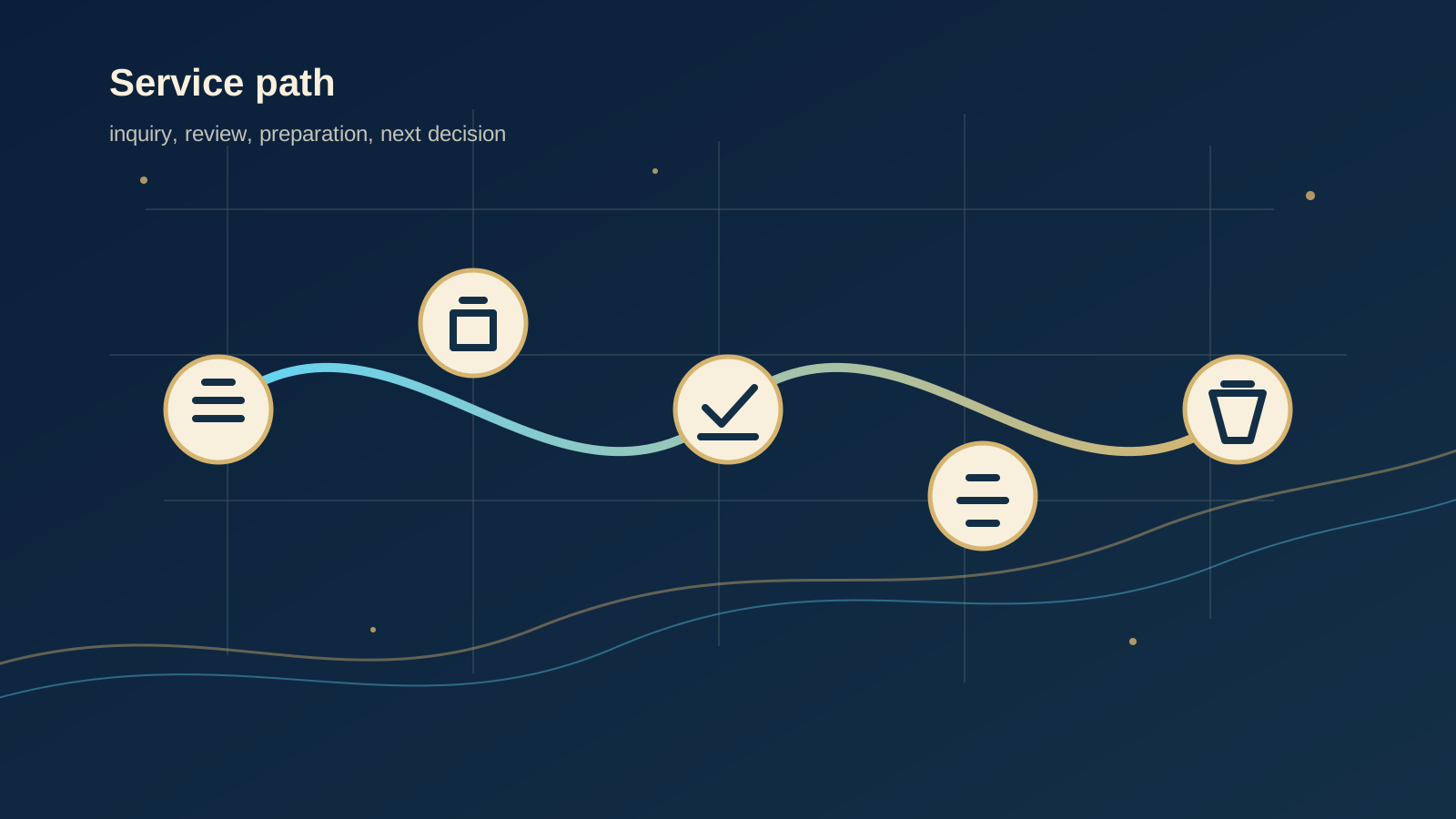
Review the product story, target buyer, reference proof, pricing logic, support model, and why a Japanese partner should continue the conversation.
Turn technical materials into a meeting deck, agenda, terms list, decision questions, and follow-up items that fit Japanese business discussions.
Separate advisory diagnosis, joint R&D, PoC validation, agency, and channel paths so each meeting has the right expectation.
After the meeting, organize open questions, missing proof, materials to translate, partner responsibilities, and the next decision date.
Decision Prep
Japan DX support starts by making the business value, evidence, adoption risk, and cooperation model understandable for Japanese decision makers.
Prepare the type of company, department, role, use case, region, and cooperation mode you want to discuss.
Bring reference cases, demo status, technical limits, data restrictions, support capacity, and any compliance concerns.
Clarify expected pricing model, pilot budget, required agreement, internal owner, and target schedule.
Outputs
The first output is a decision package: what to do next, what evidence is missing, who should own it, and whether the topic is ready for a proposal, grant, training plan, or PoC.
A concise summary of the Japan-market story, buyer problem, proof points, risks, and recommended partner route.
A deck outline, agenda, terminology map, question list, and follow-up checklist for partner or enterprise meetings.
A recommendation on whether to continue with advisory preparation, translated proposal work, partner matching, or PoC design.
Timeline And Boundaries
Check whether the current story and proof are enough for a Japanese partner conversation.
Prepare the positioning memo, translated materials, agenda, and follow-up structure.
Decide whether to continue with validation, agency discussion, joint proposal, or a later re-approach.
Consultation Prep
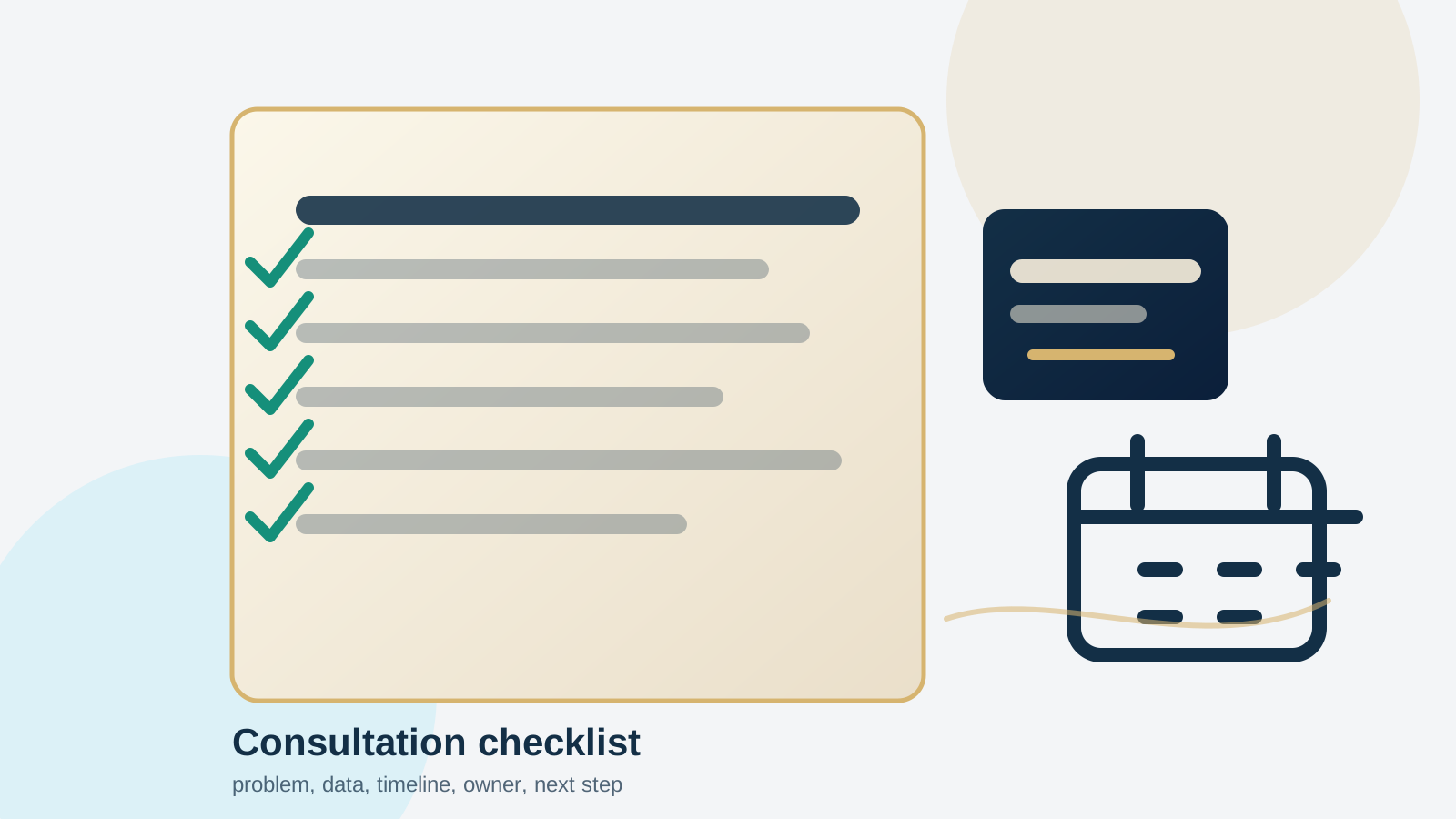
Before the first call, prepare the target partner type, current deck, demo status, reference proof, preferred cooperation model, and any material that already needs Japanese business translation.
Prepare the type of company, department, role, use case, region, and cooperation mode you want to discuss.
Bring reference cases, demo status, technical limits, data restrictions, support capacity, and any compliance concerns.
Clarify expected pricing model, pilot budget, required agreement, internal owner, and target schedule.
Share the current business topic and expected outcome. In-Stars will help choose the right next step across AI consulting, grant assessment, industry-academia collaboration, Japan DX (Digital Transformation), or PoC planning.