Companies with R&D questions but no partner structure
Teams that need academic or research support but are not yet clear about the business problem, field data, or delivery responsibility.
Industry-Academia
In-Stars converts FortuneTek industry-government-academia experience into executable collaboration design among enterprises, universities, research centers, and grant programs.
Discuss collaboration and R&D planning
Who This Is For
If the topic is already important but the scope, evidence, owner, or budget decision is still unclear, In-Stars can help organize the first practical path.
Teams that need academic or research support but are not yet clear about the business problem, field data, or delivery responsibility.
University or research partners that need a company field, data boundary, and implementation context for applied AI or DX topics.
Teams preparing SBIR, SIIR, CITD, or PoC collaboration where partner roles, evidence, and IP expectations must be discussed early.
Consultation Flow
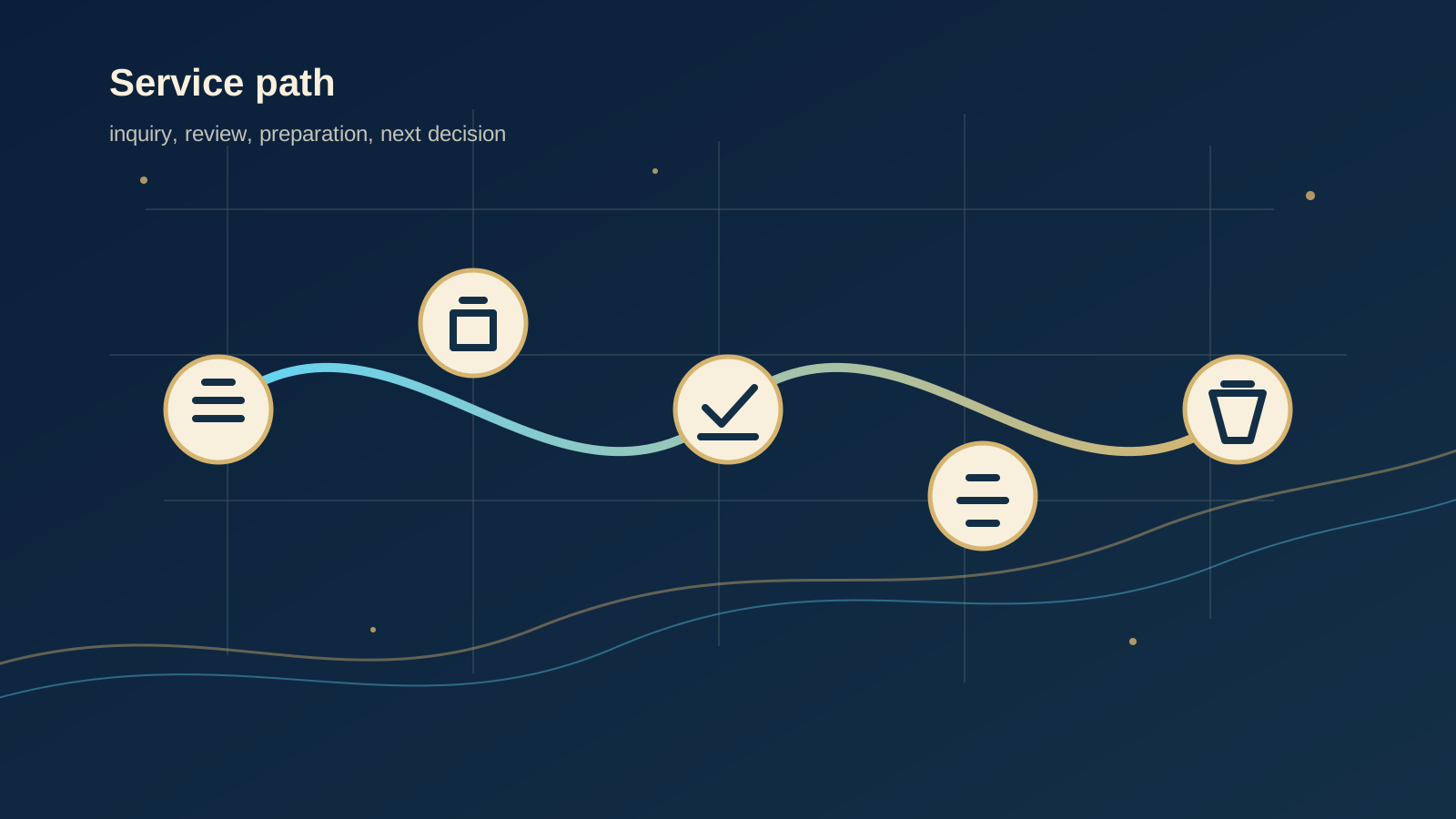
In-Stars converts FortuneTek industry-government-academia experience into executable collaboration design among enterprises, universities, research centers, and grant programs.
Translate the business problem into a short brief with objective, field, data, constraints, partner needs, and expected outcome.
Match research method, talent, facility, domain knowledge, schedule, and project leadership before asking for a formal proposal.
Define where the work will be tested, what data can be used, who reviews results, and what evidence should remain after the project.
Clarify milestone, acceptance criteria, publication limits, IP expectations, and confidential material before execution.
Decision Prep
Industry-academia work should start with a practical business brief, then move into partner selection, validation design, and evidence management.
Prepare the industry pain point, target field, available users or equipment, and why an academic partner is needed.
Clarify what data can be shared, which materials are confidential, and whether publication or patent issues may appear.
Describe the research capability, student/team role, experiment method, and schedule that would make the collaboration practical.
Outputs
The first output is a decision package: what to do next, what evidence is missing, who should own it, and whether the topic is ready for a proposal, grant, training plan, or PoC.
A customer-readable brief that explains problem, field, data, partner role, acceptance criteria, and next meeting agenda.
A short matrix for research capability, project fit, communication style, schedule, and delivery responsibility.
A practical plan for what will be tested, what evidence will be collected, and how the result can support a proposal or PoC.
Timeline And Boundaries
Clarify the business problem, field, data, and partner need.
Prepare partner criteria, discussion agenda, and a first validation plan.
Use milestones and evidence checks to keep the collaboration useful for business decisions.
Consultation Prep
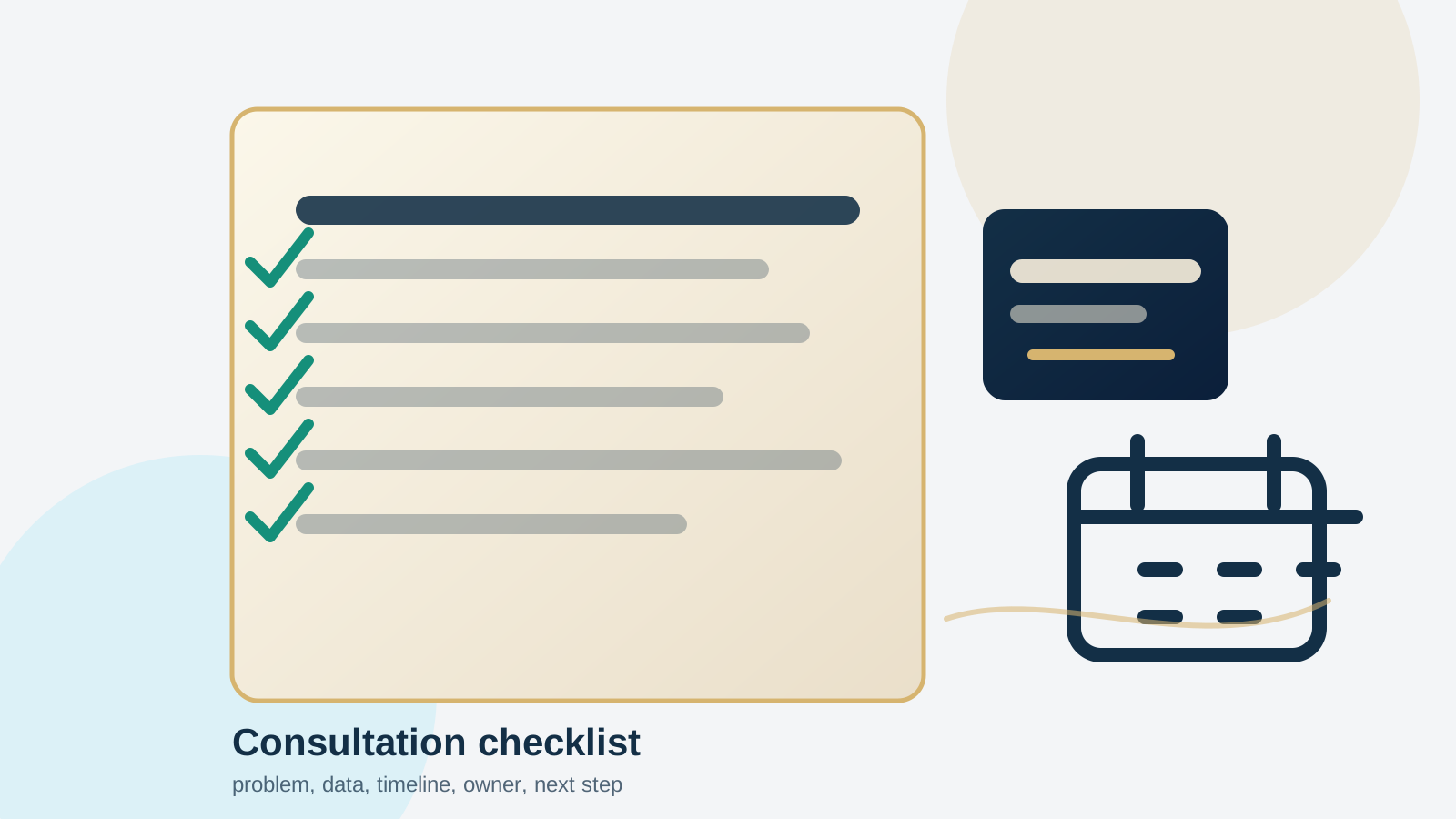
Before the first call, prepare the business problem, possible validation field, available data, confidentiality limits, expected partner type, schedule, and desired output.
Prepare the industry pain point, target field, available users or equipment, and why an academic partner is needed.
Clarify what data can be shared, which materials are confidential, and whether publication or patent issues may appear.
Describe the research capability, student/team role, experiment method, and schedule that would make the collaboration practical.
Share the current business topic and expected outcome. In-Stars will help choose the right next step across AI consulting, grant assessment, industry-academia collaboration, Japan DX (Digital Transformation), or PoC planning.